-
English National Concessionary Travel Scheme (ENCTS)
ENCTS gives older and disabled people free bus travel across England. It is funded by the UK Government and administered locally by Travel Concession Authorities (TCAs) - local councils and Passenger Transport Executives.
The scheme is established through UK legislation, including the Transport Acts and the Concessionary Bus Travel Act 2007, which set the national framework for eligibility and delivery.

-
Who delivers ENCTS
Local authorities determine eligibility (within national criteria), issue concessionary passes and reimburse operators for carrying concessionary passengers.
Bus operators are required to recognise valid ENCTS passes and provide free travel on eligible services. While the policy framework is national, delivery is local - requiring coordination between authorities and operators across England.

-
Why ITSO is required
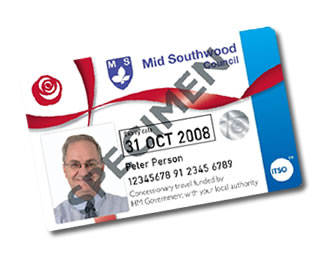
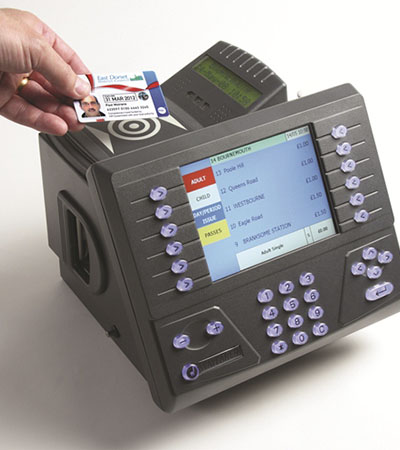
Since 2008, legislation has required all ENCTS permits to be issued as standardised, ITSO-compliant smartcards.
Each pass includes a photo of the passholder, a unique identifier, the red rose national logo and a hologram. This provides visible assurance that the pass meets the required security and compliance standards of this government-funded scheme.
Every ENCTS card operates in line with the nationally mandated Specification that ITSO maintains on behalf of the UK Government's Department for Transport.
-
Concessionary travel in Scotland
In Scotland, concessionary travel is delivered nationally by Transport Scotland through the National Entitlement Card (NEC).
Scotland represents one of the most mature large-scale implementations of ITSO-enabled concessionary travel in the UK, with over two million people accessing free bus travel and, for some eligible island residents, free ferry travel.
The NEC operates within an ITSO smart ticketing framework, enabling secure validation of entitlement across Scotland’s bus network. A single smartcard can be used across multiple operators, with travel products loaded for bus, rail and subway services, supporting a more joined-up, multi-modal passenger experience.
-
Concessionary in Wales
In Wales, concessionary travel is delivered through the Welsh Government and administered locally. Transport for Wales provide free bus travel to people aged 60 and overand eligible disabled residents.
As in England and Scotland, ITSO provides the technical foundation that enables secure entitlement validation and interoperability between operators.
Although eligibility rules and administration differ by nation, concessionary travel across England, Scotland and Wales is underpinned by the ITSO Specification.
-
National consistency and trust
The ITSO Specification defines how concessionary entitlements are securely stored on a passenger’s card and verified by the operator’s ticketing system, ensuring reliable recognition wherever they are used.
Although schemes operate nationally and are delivered locally, maintaining trust depends on secure passes, consistent validation, accurate reimbursement and reliable cross-boundary recognition.
By providing the common technical foundation behind UK concessionary travel, ITSO helps ensure schemes remain secure, interoperable and trusted.
-
Why ITSO matters
-

ITSO Core Framework
-

ITSO Community
-

The National Standard
-
ITSO Certification
-

Governance and Vision
-

News & Updates
Why itso?
Concessionary travel across the UK




Need help with concessionary travel
ITSO sets the national standard behind ENCTS smartcards, but does not issue passes or assess eligibility. For questions about applying for or replacing a pass, please contact your local authority.